
How a Reliable Moving residential move actually runs
Most residential moves we handle follow a consistent pattern that’s tuned around the specifics of your home, building, and timing.
The in-home estimate
Call or email to book an in-home estimate. A representative will visit your home and review the size and scope of everything that’s moving, along with specialty items, building access (elevators, stairs, parking), and any constraints (heritage stairs, narrow halls, strata move-in rules). After the visit, your representative will draft a customized written estimate for your review within 24 hours. How a move is priced is set out when you get a free quote.
Day-before confirmation
We call the day before to confirm timing, building access, elevator booking, and parking. This is also where we surface anything that might affect the morning — a power outage, a construction zone, an elevator suddenly out of service.
Move day
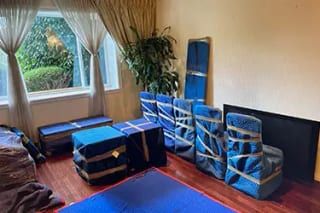
Crew arrives at the start window with the truck staged. We protect the floors along the route, wrap your furniture in moving blankets and pads, and load with a defined plan — heavy on the bottom, fragile on the top, weight balanced across the truck axle. For condos and towers we work with the building’s freight-elevator booking; for detached homes we route the loading sequence around your driveway and curbside access.
Unload and placement
At destination we place items where you want them, not where it’s easiest. We do basic furniture reassembly. If you’ve added unpacking service, we unpack, place items per your direction, and remove the empty cardboard.
Same-day completion
We’re built around finishing the same day. For local moves that’s the default; for larger homes with packing, we may split across two days, but we agree on that scope in advance.
Homes we move
As part of our residential moving service, we can help you if you are moving to or from single-family homes, multi-family homes, condos, townhouses and apartments. Crew and truck are matched to the actual inventory and the building’s constraints, worked out at the in-home estimate rather than assumed from a bedroom count.
What a Vancouver-area residential move actually requires
- Building coordination: it’s always best to schedule your move with your building manager — many buildings have move-out requirements such as a freight-elevator reservation and set hours of operation.
- Heritage-home care: dollies and hand trucks sized to narrow pre-1940 stair runs, with the route planned before moving day.
- Specialty item planning: pianos, antiques, billiard tables — equipment and crew matched in advance.
- Winter conditions: a Lower Mainland winter move means wet floors and slower loading in the rain — we build the extra time into the plan rather than rushing the crew on a slick driveway.